Car Key Not Detected? A Guide to Troubleshooting and Car Ignition Repair

You are already ten minutes late for a crucial morning meeting when you press the start button, only to be met with a silent dashboard and a frustrating car key not detected warning. It is a high-stress moment that immediately triggers concerns about expensive dealership towing fees and lost time. We understand the confusion of not knowing whether the fault lies with a tiny battery, a damaged transponder chip, or a complex failure within the vehicle's immobilizer system.
While most drivers assume a fresh battery is the universal fix, this guide will show you why that is not always the case. You will learn how to identify the specific communication failures that point toward necessary ignition repair and discover a few specialized techniques to get your engine started immediately. We will also examine how a mobile locksmith can provide on-site solutions, saving you the 30% to 50% price hike typically found at a dealership. From diagnostic steps to professional restoration, you will find the logical path to getting back on the road without the dealership headache.
Key Takeaways
Understand the digital "handshake" between your fob and the vehicle to pinpoint exactly where the security communication is failing.
Identify the most common culprits behind a car key not detected error, from simple battery depletion to complex signal interference.
Learn to distinguish between a faulty key fob and a failing ignition antenna or immobilizer system that requires professional repair.
Discover the "2-minute rule" for DIY troubleshooting and when it is more efficient to call a mobile locksmith for on-site support.
Evaluate the cost benefits of mobile ignition services compared to the high towing fees and labor rates of traditional dealerships.
Table of Contents
What the 'Key Not Detected' Warning Actually Means
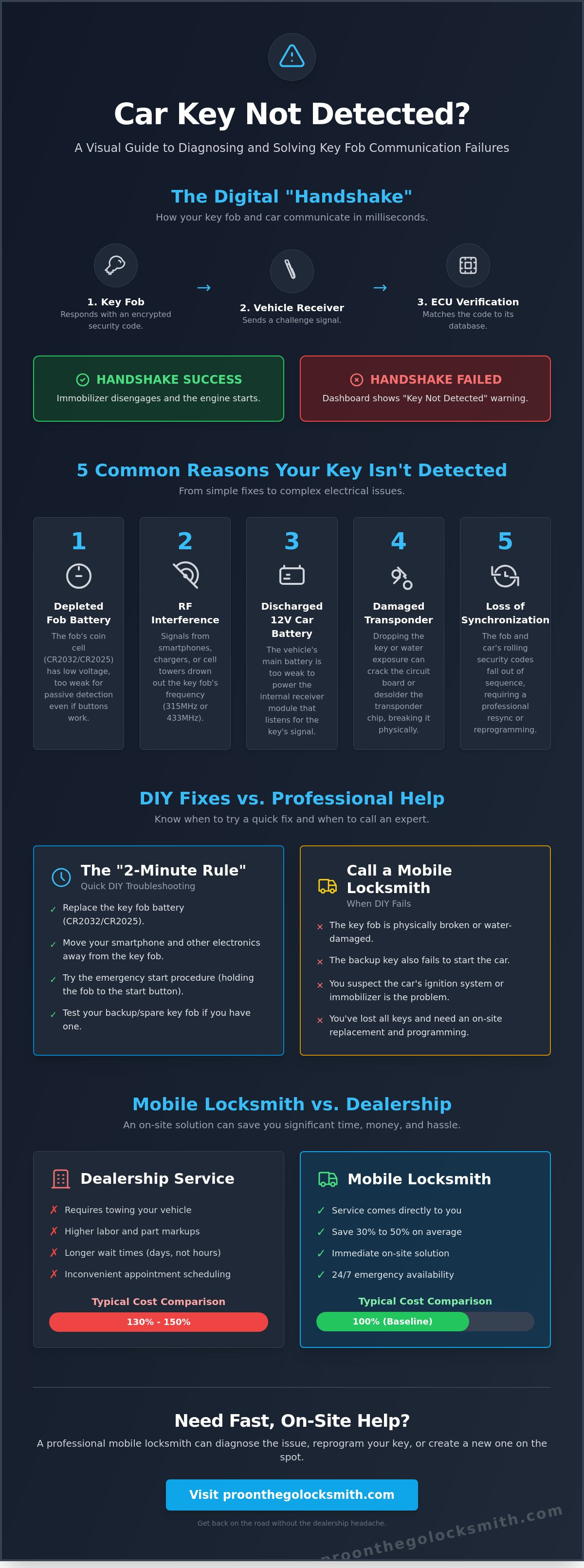
When your dashboard displays a car key not detected message, it signifies a breakdown in a sophisticated digital dialogue. This process, often called a "handshake," occurs in milliseconds. Your vehicle's security system sends out a challenge signal, and your key fob must respond with a specific, encrypted security code. The Engine Control Unit (ECU) then verifies this response against its internal database. If the codes match, the ECU grants permission to disengage the immobilizer and start the engine. If the handshake fails at any point, the system remains locked as a theft-prevention measure.
Modern push-to-start systems are significantly more sensitive than traditional metal keys. While an old-fashioned key relied on physical contact, these digital systems depend on precise Radio Frequency (RF) signal strength. Even a slight drop in voltage or a minor interference can cause the car to lose track of the fob, even if it is sitting in your pocket. Depending on your vehicle's manufacturer, you might see variations like "No Key Found," "Key Not Recognized," or "Key Fob Not Detected." Regardless of the wording, the underlying issue is a failure in this digital authentication process.
The Science of Passive Entry and Start (PEPS)
Passive Entry and Start (PEPS) technology relies on several Low Frequency (LF) antennas strategically placed inside the cabin. These antennas are designed to locate the key with high precision. Unlike active signals, which are triggered when you physically press a button on the fob, passive detection happens automatically. The car constantly "looks" for the key in specific zones. If the fob is in the trunk or just outside the door, the system may refuse to start the engine because it cannot verify the key is in the driver's seat. This localization is a critical safety feature that prevents the vehicle from being driven away while the key is still on the curb.
Why the Signal Fails to Connect
Several technical hurdles can prevent a successful connection. Encryption mismatches are common, often triggered by electrical surges or improper battery swaps that cause the fob to lose its place in the rolling code sequence. Environmental factors also play a role. Most North American vehicles operate on a 315MHz frequency, while many European models use 433MHz. Devices like high-powered smartphone chargers, nearby cell towers, or even other electronic fobs can disrupt these frequencies and lead to a car key not detected error. The immobilizer system acts as the primary gatekeeper for engine ignition, ensuring that only a verified, authorized signal can bypass the vehicle's security protocols.
5 Common Reasons Your Car Key Isn't Being Detected
Identifying why you are seeing a car key not detected error requires a methodical approach. It is rarely a random failure; usually, one of five technical hurdles is blocking the digital handshake we discussed previously. Understanding these variables helps you decide whether you need a simple trip to the store or a professional diagnostic tool.
Depleted Coin Cell Battery: Most fobs use a CR2032 or CR2025 battery. Even if the buttons still lock the doors, the voltage may be too low to support the constant "pinging" required for passive detection.
Radio Frequency (RF) Interference: Modern fobs operate on specific frequencies that are easily crowded. Other electronic devices can create a "wall" of digital noise that drowns out your key.
Discharged 12V Vehicle Battery: If your car's main battery is weak, the receiver module inside the dashboard may not have sufficient power to listen for the key's signal.
Internal Transponder Damage: Dropping your keys or exposing them to moisture can crack the delicate circuit board or desolder the transponder chip. If the hardware is physically compromised, you will likely need a professional car key replacement to restore functionality.
Loss of Synchronization: Encryption protocols use rolling codes that change every time you use the key. Occasionally, the fob and the car fall out of sequence, requiring a resync or professional reprogramming.
The 'Hidden' Causes of Signal Interference
Signal blockage is often environmental. Keeping your smartphone and key fob in the same pocket is a frequent culprit; the phone's internal antennas can act as a shield that prevents the car from "seeing" the fob. Magnetic interference from aftermarket accessories, such as high-powered dash cams or heavy metal keychains, can also distort the signal. In areas like Tampa, parking near high-voltage power lines or large broadcasting towers can create enough ambient RF noise to trigger a car key not detected warning temporarily.
Emergency Start: The 'Fob-to-Button' Trick
When the active RF signal fails, you can often use the passive RFID chip inside the fob to start the engine. This chip doesn't require battery power; it is energized by the car's own antenna. Most manufacturers include a backup transceiver slot located in the center console, cup holder, or steering column. If you can't find a slot, try holding the key fob directly against the Start/Stop button while pressing it. This proximity allows the car to read the chip's unique ID even if the fob's battery is completely dead, providing a reliable way to get home before seeking a permanent fix.
The Ignition Connection: When the Problem Is the Vehicle
If you have already performed a battery swap and cleared away signal interference, but the car key not detected warning remains, the fault likely lies within the vehicle's internal hardware. The car is no longer just a passive recipient; it is an active participant in the digital handshake. When the car's internal components fail to "listen" or process the security data, the engine will remain immobilized regardless of how healthy your key fob battery is.
Several vehicle-side components can trigger this failure:
Immobilizer Antenna: This is often a copper ring located around the ignition cylinder or hidden behind the dashboard. It acts as the "ear" of the car. If the coil is cracked or the connection is loose, it cannot pick up the transponder's signal.
Faulty Ignition Switch: An ignition switch does more than just turn the engine; it distributes power to the security modules. If the electrical contacts inside the switch wear out, the receiver may never receive the power it needs to scan for your key.
Blown Fuses: The Body Control Module (BCM) and the security system are protected by fuses. A simple surge can pop a fuse, effectively cutting the "brain" off from the "ear."
Wiring Harness Issues: Modern vehicles are packed with complex wiring. Heat, constant vibration, or even rodent damage can fray the wires connecting the antenna to the ECU, leading to intermittent or total detection failure.
Faulty Immobilizer Antennas and Receivers
A failed antenna often presents specific symptoms. You might notice the key works perfectly to unlock the doors from the outside, but the car refuses to acknowledge it once you are in the driver's seat. In Florida, the extreme heat and high humidity can accelerate the degradation of these sensitive electronic connections. Moisture can cause microscopic corrosion on the antenna's pins, leading to increased resistance and signal loss. A professional diagnostic process involves testing the antenna's resonance and verifying that the vehicle-side receiver is actually broadcasting its challenge signal.
The Role of Professional Car Ignition Repair
When the receiver or the switch assembly dies, specialized car ignition repair becomes necessary. This isn't a task for a general mechanic; it requires an expert who understands the integration between mechanical locks and electronic security. Rather than a full replacement, a skilled technician can often repair the specific electrical faults within the ignition path. By using advanced OBD-II diagnostic platforms, a locksmith can communicate directly with the car's computer to see exactly where the communication chain is broken, ensuring a precise resolution without the need for unnecessary parts.
DIY Troubleshooting vs. Professional Locksmith Services
When you are staring at a car key not detected warning, we recommend the two-minute rule. Replace the fob battery with a high-quality name brand. If the vehicle still refuses to start, the issue has likely moved beyond a simple power failure. DIY attempts beyond this point often lead to more expensive complications. Modern security systems are designed to be tamper-resistant; this means you cannot program a new ignition sensor or resync a lost transponder code using standard household tools.
Diagnostic Checklist for Drivers
Before calling for help, run through this logical progression to narrow down the fault:
Test the spare key: If the spare starts the car, the original fob is damaged. If both fail, the problem is likely the vehicle's receiver or ignition system.
Monitor other electronics: Check if your headlights are dim or if the interior lights flicker. If they do, your car's 12V battery is the culprit, not the key.
Observe the lock/unlock function: If the buttons work to unlock the doors but the engine won't start, the remote entry frequency is fine, but the transponder chip or ignition antenna has failed.
Why Professional Programming Is Required
Understanding what is a transponder key security requires specialized software to pair with the ECU. This pairing is a protected process that prevents unauthorized keys from being added to the vehicle's memory. Attempting to bypass these protocols with unverified software can "brick" your car's computer. This leads to a total system lockout that only a dealership can reset at a massive cost. A professional locksmith uses licensed diagnostic platforms to verify the signal frequency and chip integrity before performing any repairs, ensuring the new data matches the car's existing security architecture perfectly.
Choosing a mobile locksmith over a dealership is a pragmatic decision. Dealerships usually require you to tow the vehicle to their lot, which can add $75 to $150 to your final bill before they even begin the work. Mobile locksmiths also offer 30% to 50% savings compared to dealership rates for the same high-security programming. We also caution against "bargain" fobs found online. These cheap aftermarket units frequently use low-grade chips that lose synchronization after a few weeks, leaving you stranded once again. If you need a reliable, on-site solution, contact us for professional car key replacement services that get you back on the road immediately.
On-Site Mobile Solutions for Tampa Drivers
When your morning is derailed by a car key not detected warning, waiting for a tow truck to haul your vehicle to a Tampa dealership is rarely the most efficient choice. Pro On The Go Locksmith operates as a fully equipped mobile diagnostic center. We bring the specialized software and hardware required for Ignition Repair and Key Fob Programming directly to your driveway or office parking lot. This on-site approach eliminates the $75 to $150 towing fee and the multi-day wait times common at local service centers.
To ensure a rapid resolution, have your Vehicle Identification Number (VIN), the make and model of the car, and your exact location ready when you call. This information allows us to arrive with the correct key blanks and specialized transponder chips for your specific security system. Our technicians arrive prepared to handle everything from a simple battery sync to complex Broken Car Key Extraction or a complete ignition switch overhaul. We aim for a "one-visit" resolution that restores your vehicle's mobility without unnecessary delays.
Expert Car Ignition Repair in Tampa
Our specialized approach focuses on the unique challenges faced by Florida drivers. The intense Florida heat often causes the plastic and metal components in your ignition to expand and contract, leading to the internal antenna failures we discussed earlier. We provide expert Ignition Repair services across the region, serving neighborhoods from the busy streets of Downtown Tampa to the residential communities of Brandon and Westchase. Whether you are facing an all-keys-lost situation or a car key not detected error due to a faulty receiver, we perform the necessary diagnostics and repairs on the spot.
Restoring Your Security and Peace of Mind
Choosing a professional service means benefiting from the expertise of a Florida-licensed and insured technician. We prioritize transparency and honesty, providing clear expectations before the work begins. You won't encounter the "dealership markups" or hidden fees often associated with high-security vehicle repairs. Our goal is to provide a sophisticated alternative to less-specialized competitors by valuing your time and safety. We verify the final result with a full system check, ensuring your key and vehicle are in perfect digital alignment before we leave the site.
Stuck with a 'Key Not Detected' error? Contact Pro On The Go Locksmith for fast mobile help!
Restore Your Vehicle’s Mobility with Confidence
A car key not detected warning is a technical hurdle that requires a methodical solution, not a stressful tow to the dealership. By distinguishing between a simple battery failure and a more complex ignition communication error, you can save significant time and avoid unnecessary expenses. Modern vehicle security is sophisticated; however, it's entirely manageable when you have access to the right diagnostic tools and specialized expertise.
Pro On The Go Locksmith provides a seamless alternative to traditional repair shops. Our mobile technicians serve the entire Tampa area, specializing in transponder and smart key programming for all major makes and models. As a Florida-licensed specialist (License #HCLOC23013), we focus on precise, on-site restoration that gets you back behind the wheel without the dealership markup. Don't let a signal failure disrupt your day further. Get Fast Mobile Car Key and Ignition Help in Tampa and experience a faster, more reliable way to resolve your ignition issues. We're ready to help you move forward.
Frequently Asked Questions
Can a dead car battery cause a 'key not detected' error?
Yes, a dead or weak 12V vehicle battery is a frequent culprit for this specific failure. The receiver module inside your dashboard requires a steady electrical current to scan for the key's signal. If the car's main battery voltage drops too low, the security system cannot power the internal antennas, resulting in a car key not detected message even if your fob battery is brand new.
How do I start my car if the key fob battery is completely dead?
You can start the engine by holding the key fob directly against the Start/Stop button while pressing it. Most modern vehicles include a backup RFID transceiver designed to function without fob battery power. This proximity allows the car's internal antenna to energize the passive chip inside the key, effectively bypassing the need for an active radio signal to verify your identity.
Why does my car say 'key not detected' while I'm driving?
Receiving this warning while driving typically indicates a momentary loss of signal or an internal fault in the security module. For safety reasons, the engine will not shut off while the vehicle is in motion. However, if you turn the car off, you may not be able to restart it until the communication failure is resolved by a professional technician with specialized diagnostic equipment.
Will changing my key fob battery require me to reprogram the key?
Most vehicles don't require reprogramming after a standard battery replacement. The encrypted security codes are stored in non-volatile memory that remains intact even without power. If the fob was dead for an extended period, you might need to perform a simple synchronization sequence, which is usually outlined in your owner's manual, to get the rolling codes back in alignment.
How much does it cost to have a locksmith fix a 'key not detected' issue?
The total cost depends on whether the fault lies in the software, the fob hardware, or the vehicle's ignition components. Mobile locksmiths typically offer a more cost-effective solution by performing the diagnostic and repair on-site. This eliminates high towing fees and dealership labor rates that often inflate the total price of restoration when the vehicle is immobilized.
Can signal interference from my phone really block my car key?
Yes, smartphones and other electronic devices can create significant Radio Frequency (RF) interference. If your phone and key are in the same pocket, the phone's internal antennas can act as a shield. This digital noise frequently triggers a car key not detected error by drowning out the fob's low-power 315MHz or 433MHz transmission to the vehicle's internal receiver.
What should I do if my spare key also isn't detected by the car?
If your spare key also fails to connect, the problem is verified as a vehicle-side failure rather than a fob issue. This situation points toward a blown security fuse, a faulty Body Control Module, or a damaged immobilizer antenna ring. You should avoid further DIY attempts and contact a specialist who can perform an OBD-II diagnostic scan to locate the electrical break.
Is a 'key not detected' error always a sign of a bad ignition?
No, this error message is not always an indication of a mechanical ignition failure. It is a broad warning that covers any breakdown in the digital handshake between the car and the key. While a faulty ignition switch or antenna ring can cause it, simple issues like battery depletion, water damage to the fob, or environmental signal interference are much more common.